

This year, an exhibition on the theme of ENERGY is taking shape in several phases in the castle cellar, featuring various installations and interactive elements that bridge the analog and digital worlds. The first elements were developed during two different project weeks with young people this summer. The exhibition will be rounded out with additions by system designer Jakob Rüdrich. We’ll then celebrate the opening on December 5.
Workshop 1
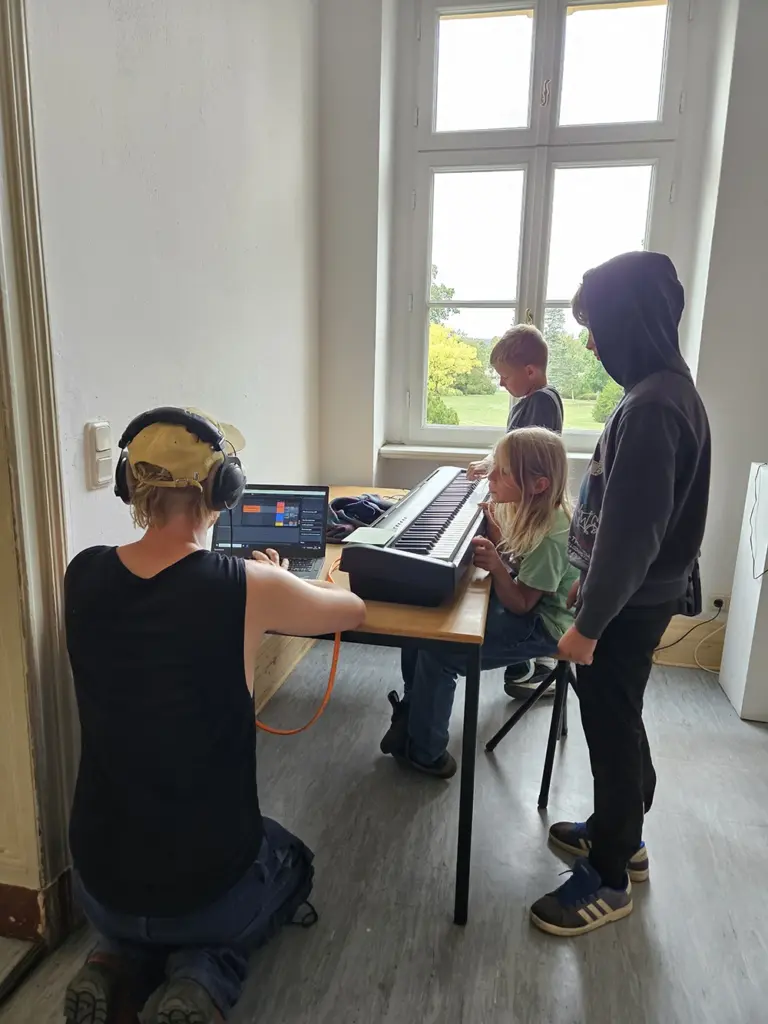
Shortly before summer break, students at the Erna and Kurt Kretschmann High School in Bad Freienwalde began working on the first components. They had a choice between the animation station and the media lab in the basement. And off they went: For example, a few kids fitted an old bicycle from the collection with small microcontrollers and screens, while others created matching animated sequences. Depending on what’s moved on the bicycle, short animations appear.
Energy source: thunderstorms
Energy Source: Black Hole
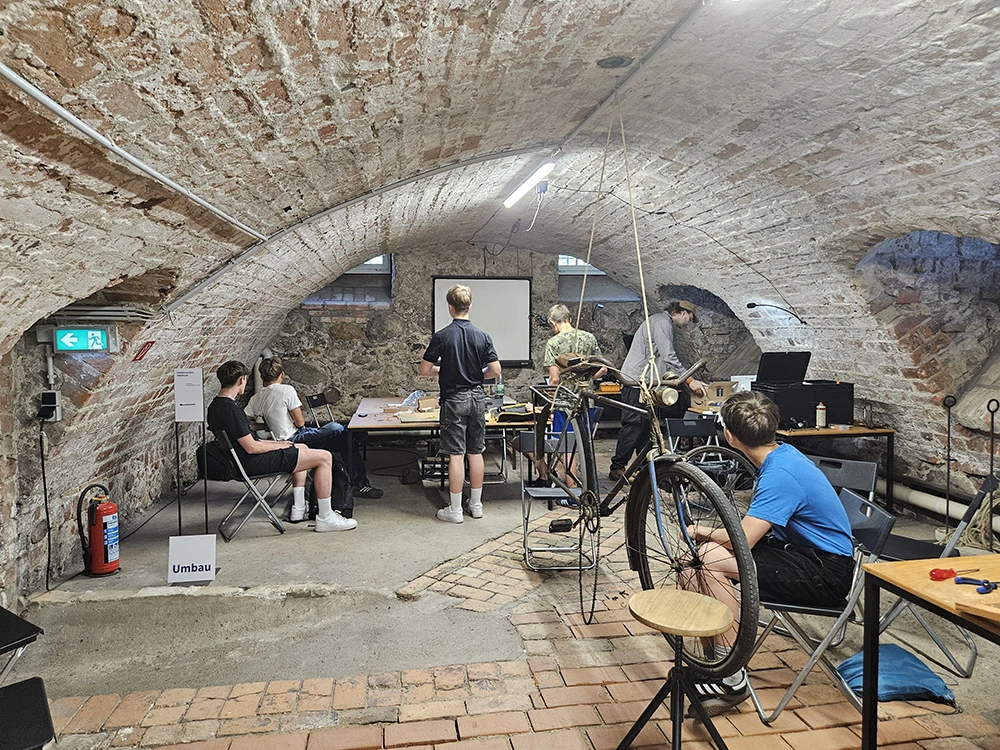
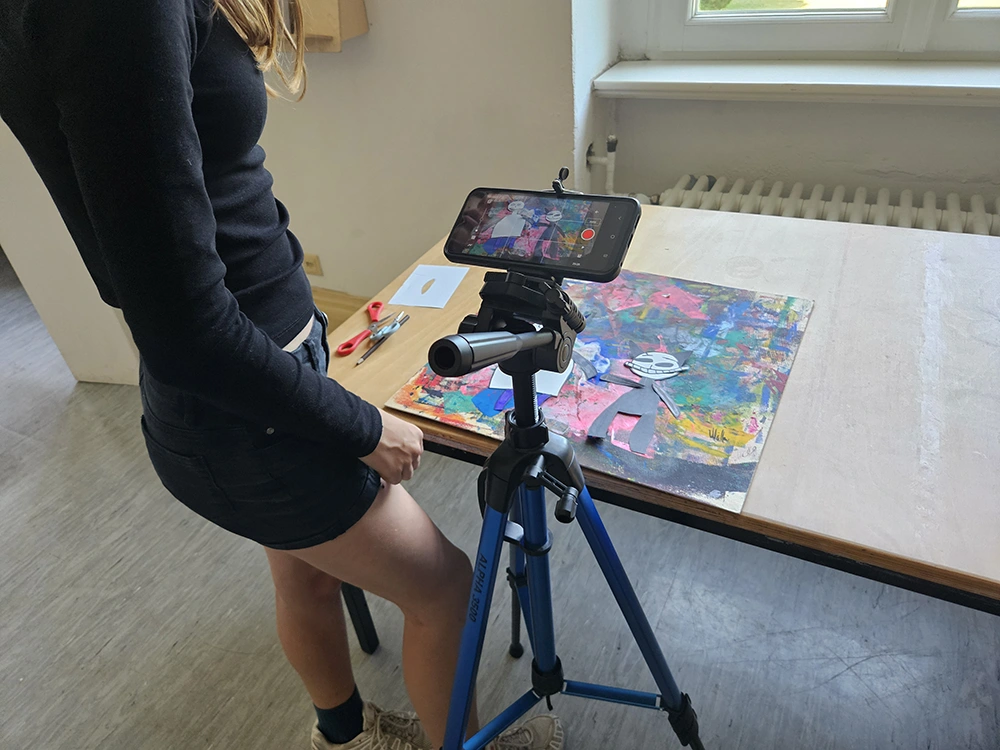
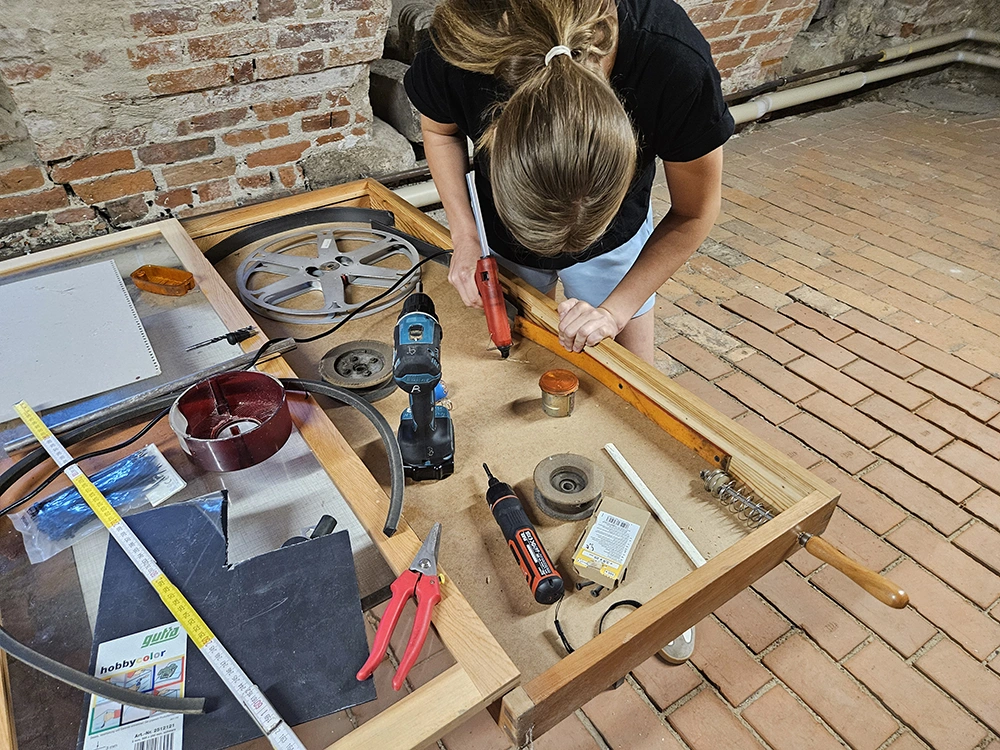
Workshop 2
In the second workshop with children from the Freie Schule Müncheberg, audio collages were added to the exhibition. Armed with soldering irons and microphones, the children created small audio players with accompanying audio pieces. And they didn’t just build them—they also camped out with us right away. How fortunate that they had soldered their own flashlights as well.
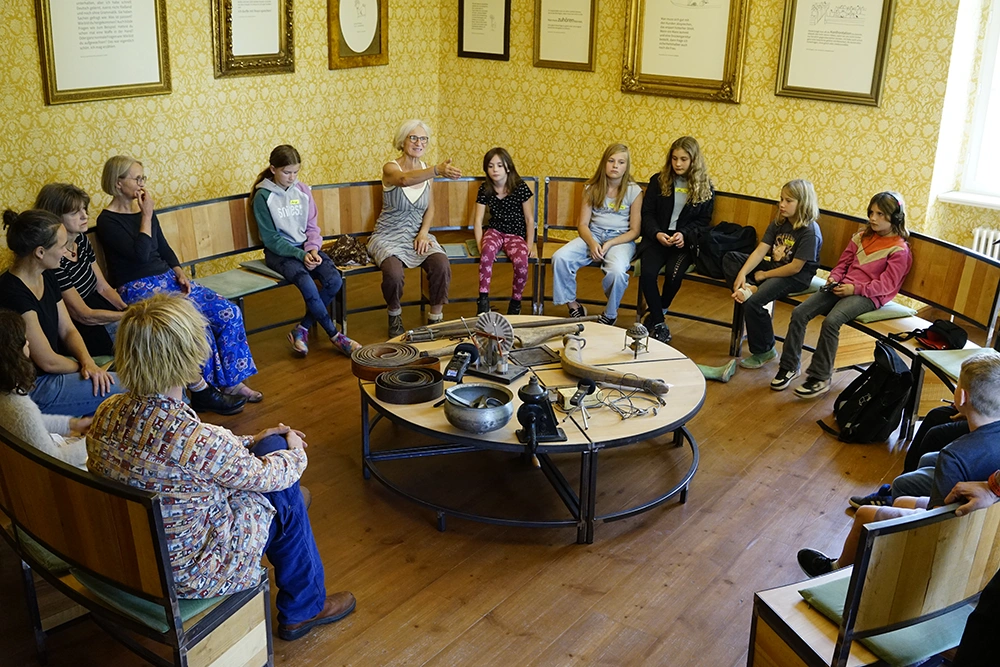
We began the workshop with a storytelling activity in which we discussed various objects from the collection that tell us something about ENERGY. This led to these four little riddles:
In the workshops, we worked with the young people to explore the processes behind digital devices. Starting with simple, hand-soldered circuits—which are still powered at the analog level—we moved on to microcontrollers that digitally process the data 0 (power off) and 1 (power on). These processes were brought to life through audiovisual means in the animation and audio workshops offered in parallel.
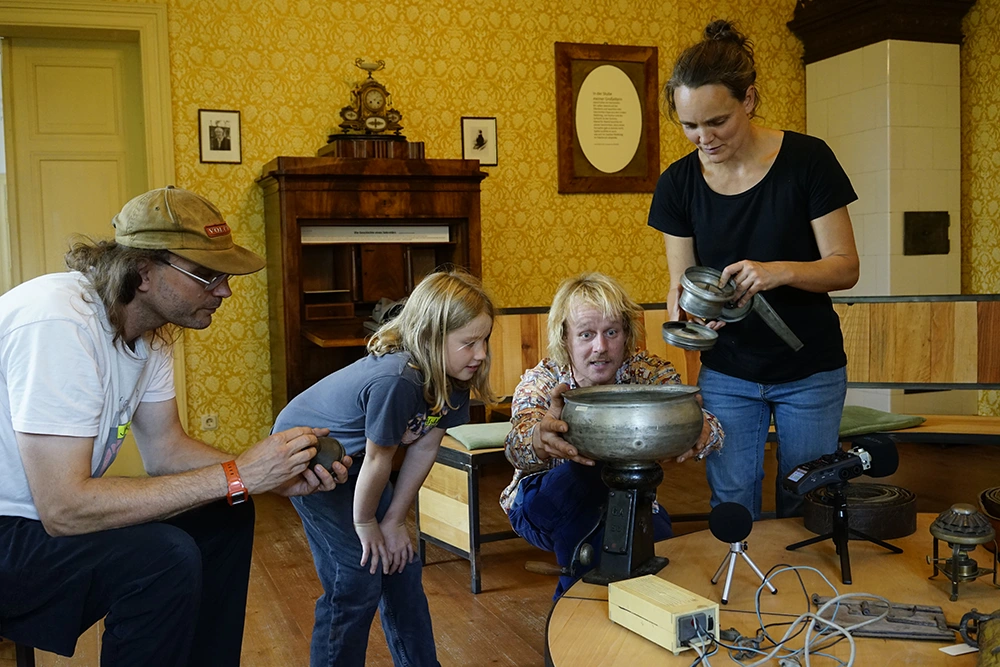
Workshop Leaders: Jakob Rüdrich, Mathilde Scholz, Julius Breitenfeld
A project on regional education at the Oderbruch Museum, funded by the MWFK through the „Digital Transformation in Culture (DIWA)“ grant program.