

The Oderbruch - people make landscape
In 2022, the Oderbruch will be the first cultural landscape to receive the European Heritage Seal. The seal is awarded to the landscape as cultural heritage because the ideals and history of the EU are symbolized here in a special way.
Under the title "The Oderbruch - People Make Landscape", the cultural landscape presents itself as a concise example of the anthropogenic shaping of landscapes in European history. As a clearly definable and largest settled river polder in Europe, it has a spatially transcending water system, a so-called landscape machine, which integrates technical elements from more than 250 years in an extension of almost 1,000 square kilometers. The settlement history of the Oderbruch has been reflected in an extraordinarily high density of architectural monuments and is still very legible for visitors today in the form of fishing villages, colonist villages and loosely built farmsteads. In the self-image of free farmers, responsible for their own existence, the colonists continue to shape a rural democracy that is characterized by a high level of cultural and communal political vitality. Since the Prussian internal colonization of the 18th century, the population of the Oderbruch has been repeatedly enriched by immigration until today.
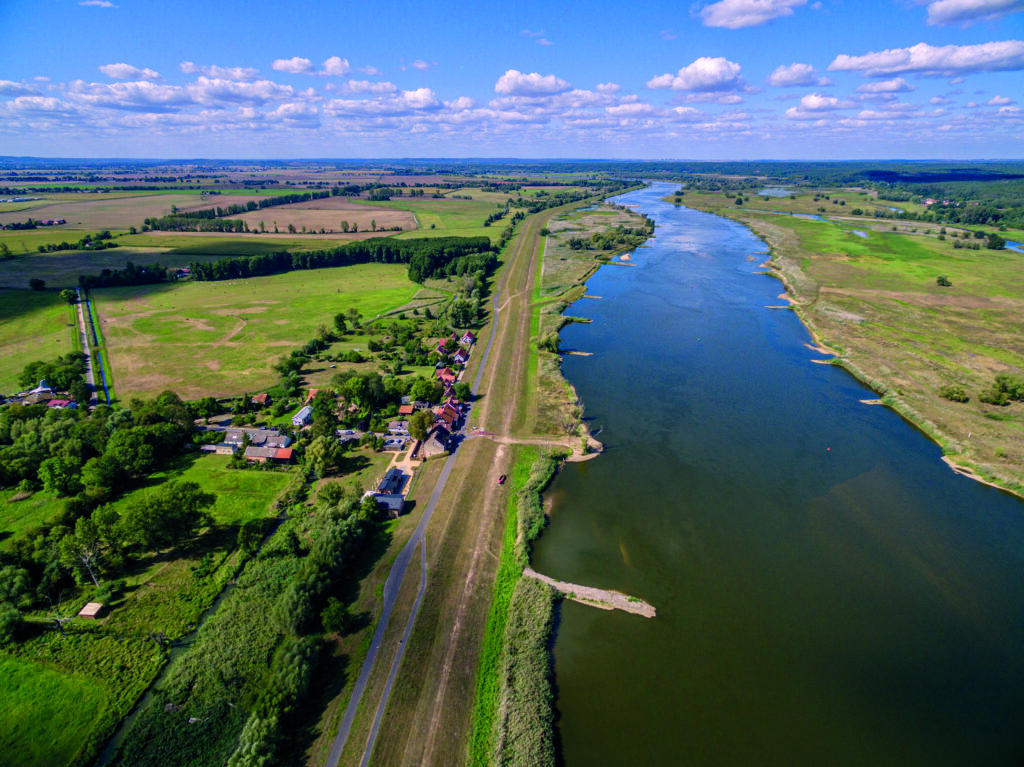
The Oderbruch is therefore exemplary for the future of rural areas in Europe. From a historical perspective, the cultural landscape also owes its existence to the most advanced engineering knowledge in Europe in the 18th century. It stands for a large-scale appropriation of nature, laborious but sustainable, because its water system has been continuously optimized and made more environmentally friendly over ten generations of system breaks and wars. Thanks to immigration from many parts of Europe, the Oderbruch is now a particularly diverse rural area: a Little Europe.
European significance
The EU awards the Cultural heritage-Seal for an indefinite period. Every four years, the 67 sites from 22 countries undergo extensive monitoring, which reviews the activities of each individual site and how the cultural heritage and European history is communicated.
The current 2024 report continues to recognize the Oderbruch as a culturally rich landscape with a high concentration of monuments that is in a constant state of change. It recognizes the diverse approaches that enable visitors and residents to experience the Oderbruch landscape today: Exhibitions, art, music and theater projects, debate formats and educational projects create diverse narrative formats in which the landscape space is addressed today.
The report particularly emphasizes the brand identity created in the region. Joint festivals, brochures, exhibitions and events use the seal as a label for the region and more than 40 cultural heritage sites now jointly advertise their offers and events on the website cultural-heritage-orbreak.com.
The entire report is here has been published.
European projects
More than 60 sites across Europe bear the European Heritage Label. We are in exchange with various other sites in order to tell the European story together.
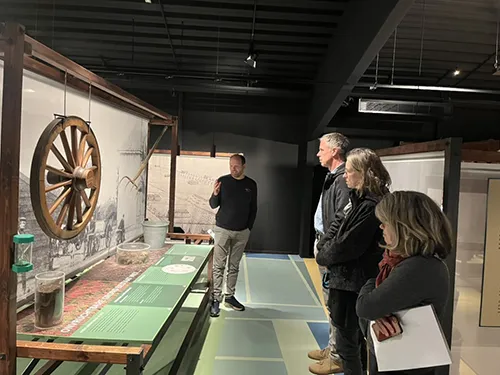
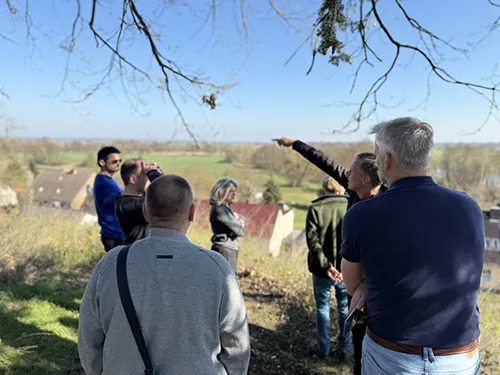
A project is currently underway together with the „Colonies de Benevolance“ in the Netherlands and Belgium.
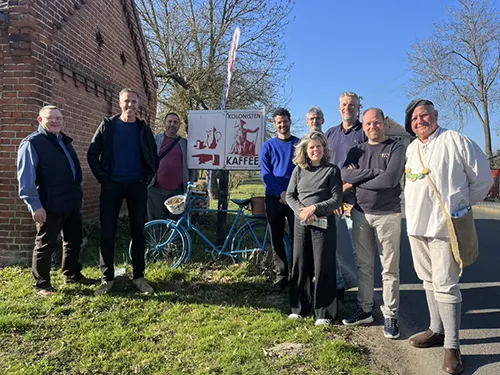
Colonies de Benevolance
Napoleon had left the Netherlands as a „kingdom of the poor“ in 1818. To combat the severe poverty in the country, General Johannes van den Bosch developed an ambitious plan and founded seven colonies in the Netherlands and Belgium. In this way, around 80,000 people were resettled in the northern part of the Netherlands between 1818 and 1921 alone.
The project was an experiment in social reform that, from today's perspective, was a forerunner of a welfare state that was 80 years ahead of the rest of the country, but at the same time came up against the complex limits of social coexistence.
Numerous traces of this period can still be seen in the landscape today. Colony houses, churches, a basket factory and even a forestry school and horticultural school from this period are open to visitors today. In the Museum De Proefkolonie in Frederiksoord (NL) impressively tells the personal stories of the people affected.
Traces of the region's special history are still visible today in the Oderbruch and the charity colonies. In the „LIVING LEGACIES“ project, we explore these special features of both sites, which still characterize the economy and rural life today. In short video clips, we discuss the central elements of both sites with the partner site: Soil, water, houses, settlements, people and landscape.